
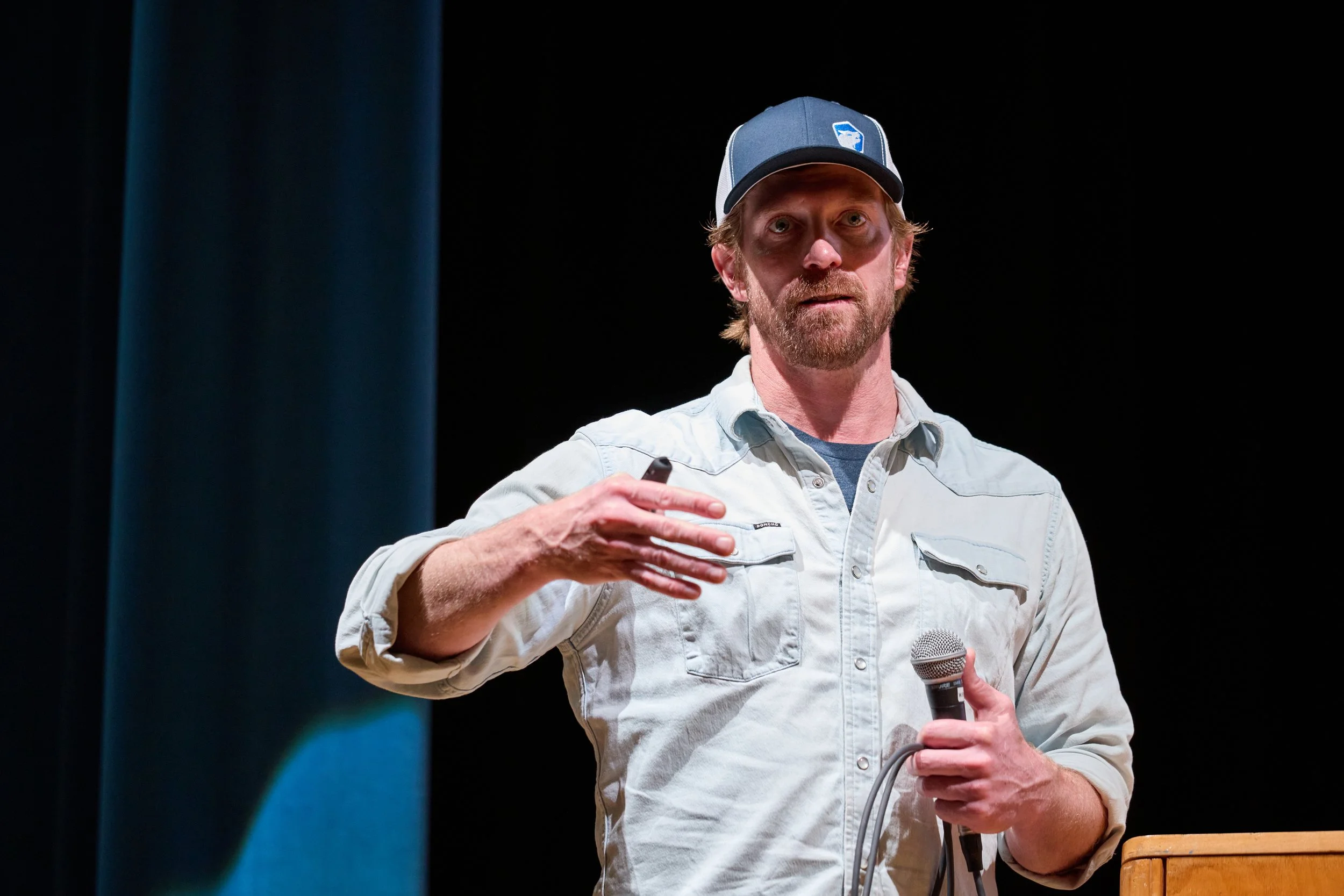
On November 5, 2026, TeraWulf welcomed Lansing residents to a community open house at Lansing Middle School to share updates on the proposed Lake Hawkeye Data Campus, answer questions, and discuss the project's potential impacts and benefits.
The evening brought together members of TeraWulf's development, operations, and community engagement teams, along with third-party specialists in engineering, cooling technology, environmental assessment, and electricity markets.
The goal was straightforward: to provide residents with a clearer understanding of what is being proposed, explain how community feedback has influenced development, and create an opportunity for open, constructive dialogue. A central focus of the evening was the presentation of a revised site plan, developed in response to concerns raised by Lansing residents about noise, water use, environmental impacts, visibility, and construction activity.
Below is a recap of the proposed changes and the most important topics discussed during the presentation and community Q&A.
Presentation Recap: A Revised Approach to Lake Hawkeye
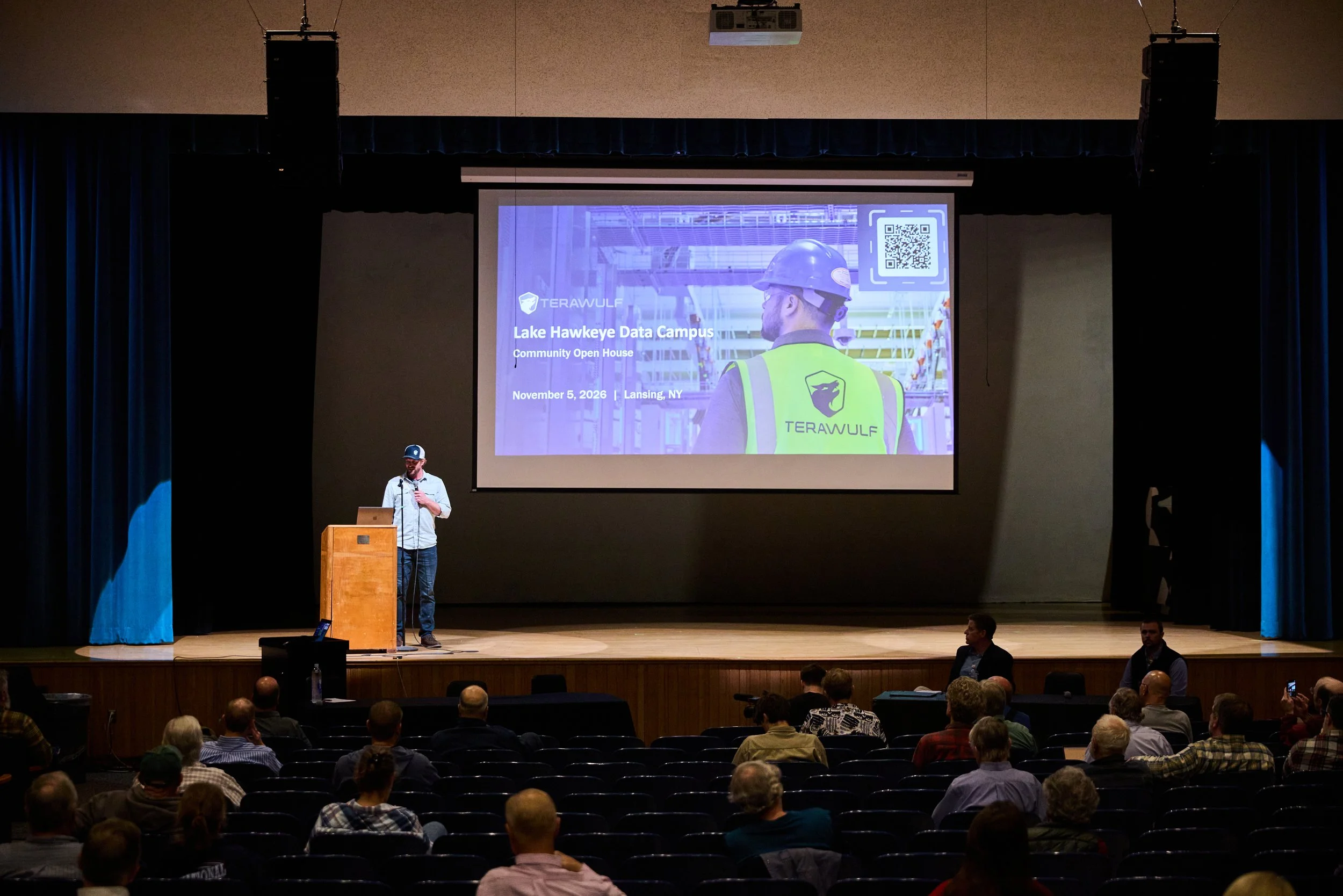
Lake Hawkeye is proposed for the former Cayuga coal-fired power plant property, an existing industrial site with established electrical infrastructure.
Rather than developing previously undeveloped land, TeraWulf's proposal seeks to repurpose a portion of this property for modern digital infrastructure while exploring opportunities to address legacy industrial facilities and restore portions of the lakeside area.
The revised plan reflects several significant changes from the original proposal:
One building instead of four: The new design consolidates the campus into a single, approximately 332,000-square-foot building, roughly 30 feet tall.
A new location farther uphill: The proposed building has been repositioned near the existing landfill, reducing visibility from Cayuga Lake and taking advantage of the surrounding topography.
Reduced land disturbance: The updated location is expected to require substantially less tree clearing, excavation, grading, and retaining-wall construction.
A quieter cooling configuration: Cooling equipment has been moved from the rooftop to ground level, with the building's location and surrounding terrain providing additional opportunities for sound attenuation.
A proven building design: The proposed facility builds on infrastructure TeraWulf has already developed and operates at its Lake Mariner Data Campus in Somerset, New York.
The updated project is being designed for approximately 260 megawatts of total power demand, supporting roughly 180 megawatts of critical IT capacity.
These changes are intended to reduce potential impacts on surrounding properties while maintaining the infrastructure needed to support long-term AI and high-performance computing operations.
Community Q&A: Addressing the Questions That Matter Most
Residents raised thoughtful and detailed questions throughout the evening. Several recurring topics emerged.
Water Use: Will the Data Center Draw Water from Cayuga Lake?
One of the most frequently discussed topics was the proposed facility's cooling system and its potential impact on local water resources.
The proposed Lake Hawkeye facility will not withdraw water from Cayuga Lake for operational cooling or discharge cooling water into the lake. Instead, the building would use a closed-loop cooling system that continuously circulates a water and food-grade propylene-glycol blend through sealed piping.
The system requires an initial fill of approximately 400,000 gallons of coolant, delivered by truck rather than drawn from local municipal water supplies, groundwater, or the lake. The coolant is expected to remain in circulation for approximately 10 years or longer, depending on ongoing monitoring and maintenance. The proposed design also eliminates the need for evaporative misting or other water-consuming cooling processes.
Once operational, the facility's routine water needs would involve employee drinking water and sanitation, estimated at no more than approximately 4,000 gallons per day.
Residents also asked about the coolant's chemical composition, maintenance, and eventual disposal, and the team stated they would provide additional information about coolant sourcing and disposal arrangements as the design advances and the project materials are submitted for review.
Noise: How Will Nearby Homes and the Lake Be Protected?
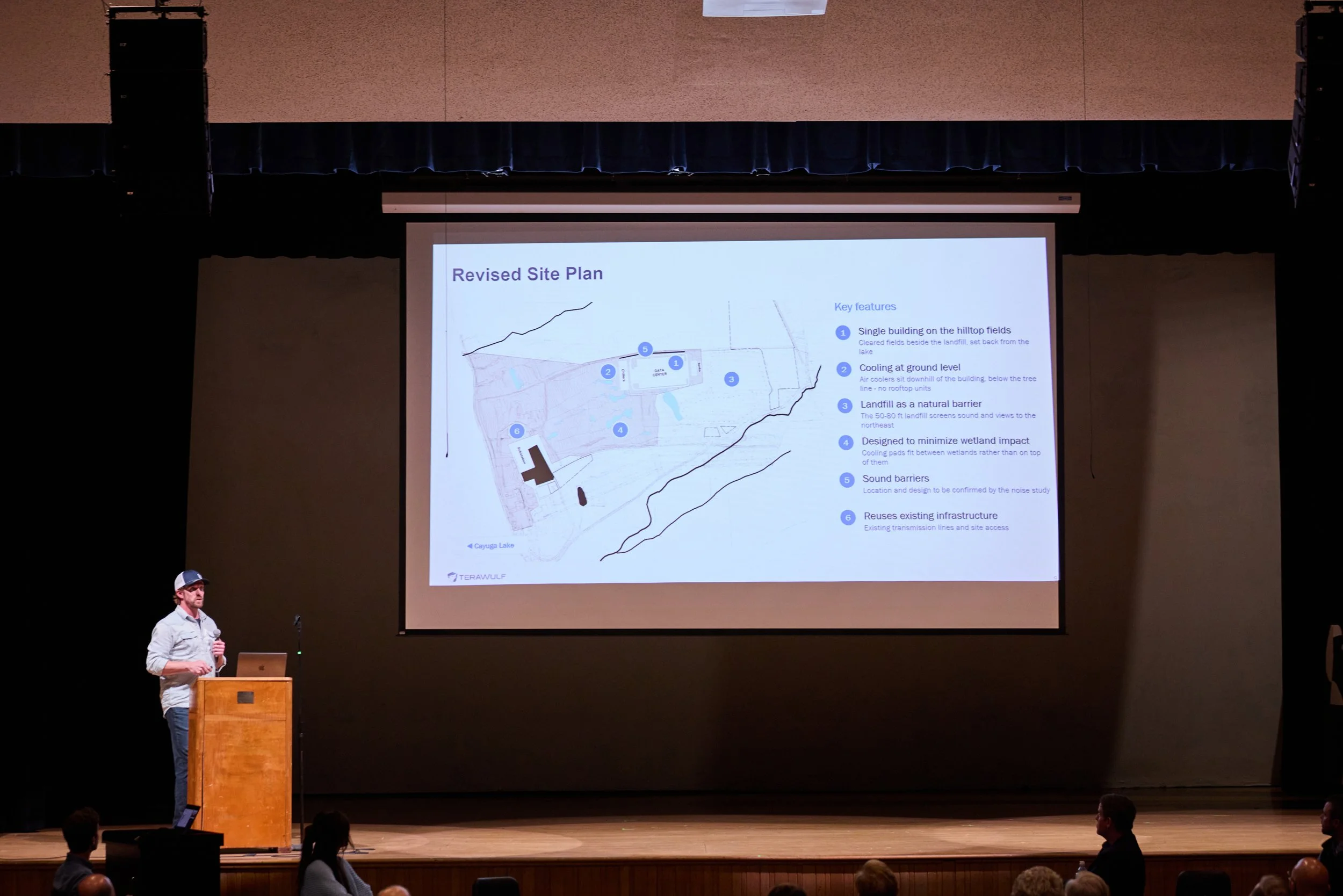
Noise was another major focus, including concerns about continuous equipment operation, nighttime conditions, and low-frequency sound.
The revised design incorporates several features intended to reduce noise, including ground-level cooling equipment, low-noise technology, and placement near terrain that can serve as a natural sound barrier.
Importantly, the final noise assessment for the revised design is not yet complete, and TeraWulf's environmental consultant, ERM, outlined plans for a comprehensive assessment that will consider:
Existing background sound levels, including winter conditions when foliage is limited.
Noise from cooling equipment, backup generators, and other operational systems.
Low-frequency sound and the potential for sound to travel across Cayuga Lake.
Surrounding topography, nearby residences, and other sensitive areas.
Additional mitigation measures, including sound-attenuation barriers where necessary.
Residents also emphasized the importance of evaluating noise during especially quiet periods, including nighttime conditions, and considering potential impacts on nearby homes and the wildlife management area. The team acknowledged these concerns and confirmed that the ongoing third-party assessments would evaluate existing sound levels, surrounding topography, and opportunities for additional mitigation.
The findings and proposed mitigation measures will be made available as part of the project's review materials.
Electricity Rates: How Are New York Customers Protected?
Residents raised important questions about whether a large new electricity user could increase costs for local households and businesses.
TeraWulf recognizes these concerns and believes developers should be accountable for the costs associated with their projects.
New York generally requires new large customers to pay for the grid upgrades that serve them, so those costs are not shifted onto existing customers. At Lake Hawkeye, TeraWulf would leverage existing electrical infrastructure and pay for the upgrades identified through NYISO's interconnection process. The facility would also be billed in its own large-customer rate class, separate from residential customers, and would buy and pay for every kilowatt-hour it uses.
At up to 300 megawatts, Lake Hawkeye represents less than 1% of the approximately 32,000 megawatts of statewide grid capacity cited during the presentation. While growing electricity demand can influence wholesale prices, New York's Public Service Commission is actively reviewing additional protections to help ensure large electricity users do not unfairly shift costs or financial risks onto households and businesses.
TeraWulf’s responsibility is to pay its appropriate share, comply with New York's requirements, and support responsible infrastructure development that protects existing customers.
Environmental Protection: What Happens to the Existing Coal Plant and Landfill?
Several questions focused on the environmental condition of the former coal plant property, including legacy contamination, the existing coal ash landfill, and the potential effects of construction.
The team explained that the revised project is designed to avoid disturbing the existing coal ash landfill and known contaminated areas. Additional soil testing, engineering assessments, and environmental studies are being conducted to inform construction planning and determine appropriate safeguards.
More broadly, the project will follow New York's State Environmental Quality Review Act (SEQR) process, which includes public review and comment before any decision is made. These environmental review materials are expected to address wetlands, wildlife, stormwater, soil conditions, noise, visual impacts, and other relevant environmental considerations.
The discussion also introduced a longer-term opportunity: removing the former coal plant infrastructure and exploring restoration of the lakeside property.
TeraWulf presented a preliminary vision for demolishing approximately 900,000 square feet of legacy industrial structures and expressed interest in working with Lansing residents and local officials to explore what the restored lakeside area could become, recognizing that community input should help shape any future plans.
Construction and Traffic: What Should Residents Expect?
The proposed construction period is estimated at approximately 14 to 18 months, with workforce activity potentially reaching 1,500 workers during peak construction. Residents were briefed on plans to evaluate construction traffic, truck routes, site access, parking, and potential effects on local roads.
The revised building location is expected to require less excavation and earthmoving than the original design, which could also reduce associated truck traffic.
TeraWulf discussed the importance of establishing road-use agreements with local authorities, documenting existing road conditions, and addressing damage attributable to construction activities. The team also emphasized the importance of providing residents with a local point of contact so concerns arising during construction can be addressed promptly.
Jobs, Tax Revenue, and Local Economic Opportunity
A significant portion of the evening focused on what the proposed development could mean for Lansing's economy, workforce, and public services.
TeraWulf reiterated two important commitments: the project would not seek property tax abatements or sales tax exemptions.
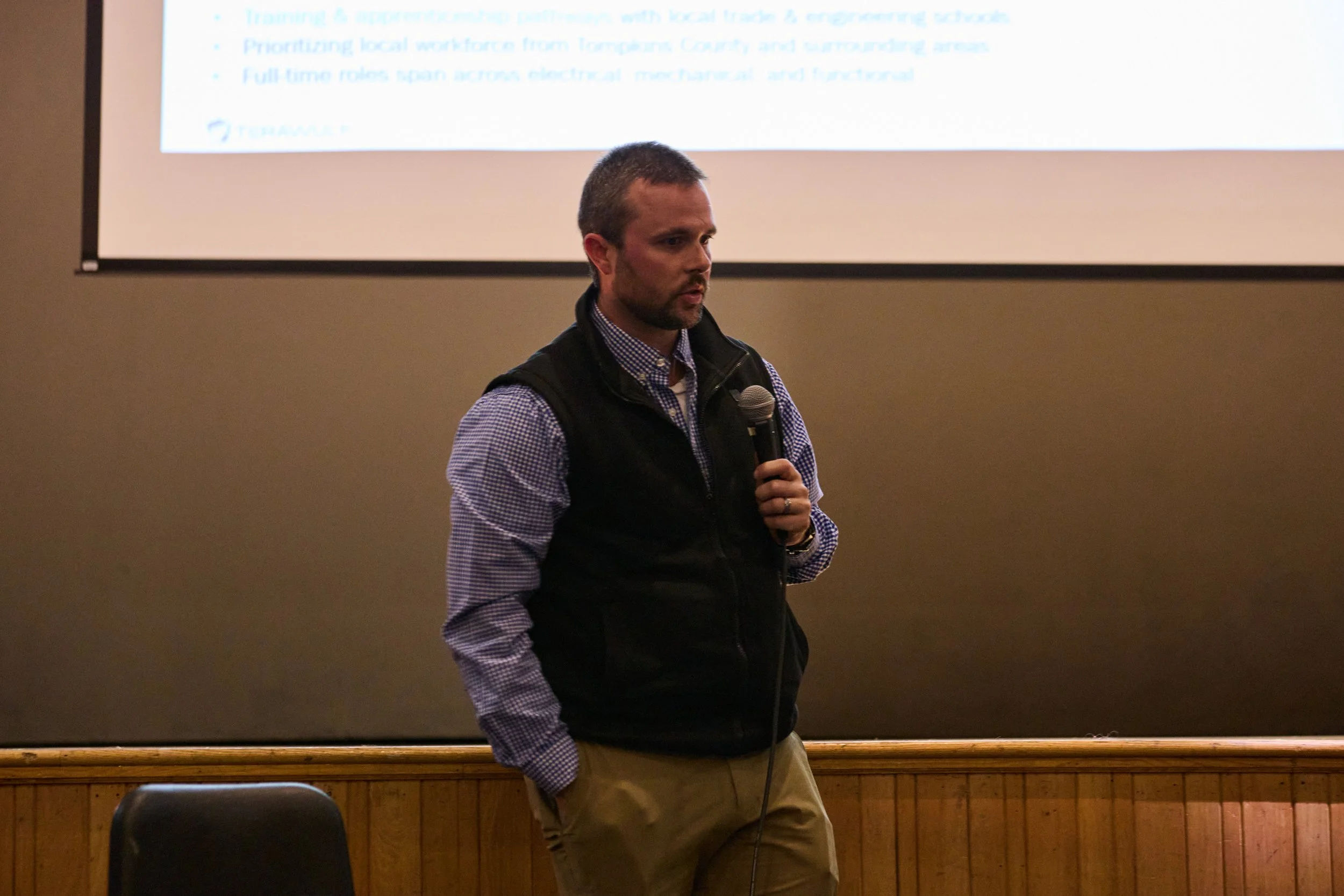
Based on preliminary financial modeling, the completed campus is projected to generate more than $8.7 million annually in local tax revenue at full operation. Estimated annual allocations include approximately $6 million for the Lansing Central School District, $1.6 million for Tompkins County, nearly $800,000 for the Town of Lansing, and $300,000 for other local taxing jurisdictions. (These figures are projections and remain dependent on the project's ultimate development, valuation, and applicable tax assessments).
The team also discussed long-term employment opportunities in facility operations, electrical and mechanical maintenance, IT, administration, and related functions. TeraWulf anticipates approximately 100 to 150 positions within its own operations, with additional employment opportunities associated with a future tenant.
Entry-level data center operations positions were described as starting around $25 per hour, while skilled electrical, mechanical, and maintenance positions may range from approximately $30 to $50 per hour, depending on experience.
Representative Jim Spoon from TeraWulf's Lake Mariner Data Campus shared examples of employee training, local hiring, and former power plant workers transitioning into new roles. Also discussed were significant opportunities for local contractors, union trades, workforce development partnerships, and apprenticeship programs.
Community Investment: How Could Lansing Benefit Beyond Jobs and Taxes?
Beyond traditional economic benefits, TeraWulf discussed the potential for a community benefits agreement developed in collaboration with local stakeholders. Such an agreement could support community priorities including education, workforce development, first responders, local infrastructure, environmental initiatives, and recreational resources
At its other campuses, TeraWulf is working with its tenants to establish significant, multiyear host community agreements that provide sustained financial support above and beyond property taxes. The Company would explore a similar framework in Lansing, with priorities informed by local officials, schools, first responders, and community stakeholders.
The team emphasized that decisions about local investment priorities should be informed by the community itself, and the broader goal is to establish a long-term relationship in which the project's presence creates opportunities for meaningful, locally directed investment.
What Happens Next? Project Review and Timeline
The open house also addressed questions about permitting, environmental review, and the project's development schedule.
TeraWulf explained that the revised site plan is being prepared for submission to the Town Planning Board, with February or March 2027 identified as the current target. The project remains subject to applicable local and state requirements, including Governor Hochul's Executive Order (EO) 62, which temporarily pauses certain state environmental permits for large data centers. Importantly, EO 62 does not apply to local planning and approvals, so Town review can continue during the moratorium.
Depending on the scope of environmental review required and the timing of necessary approvals, the team outlined a potential operational timeline beginning in 2029, with a more extensive SEQR environmental impact statement process potentially extending that schedule into 2030. These dates remain preliminary and are contingent on the applicable review and approval processes.
Throughout the evening, the team emphasized that the open house was an opportunity to share information and answer questions, not to seek project approval. Additional engineering data, environmental findings, and opportunities for public input remain important parts of the process.
Continuing the Conversation
We sincerely thank everyone who joined us on November 5th, asked questions, shared concerns, and contributed to a constructive discussion about the future of the Lake Hawkeye site. We recognize that residents have different perspectives on the proposed project, and we appreciate the time and thought that community members continue to invest in understanding its potential impacts.
The questions raised during the open house will help inform TeraWulf’s ongoing work, including the studies, project materials, and additional information we share in the months ahead. TeraWulf’s commitment is to continue engaging openly, providing clear and accurate information, and listening to the community as the process moves forward.
Thank you again to the Lansing community for participating. We look forward to continuing a transparent, respectful, and productive dialogue.
Visit this link to watch the full open house recording, and click here for the presentation slides.